


When a customer asks an AI assistant about your brand, the answer is often confidently wrong. Automated dashboards won't catch these hallucinations. Learn why you need a manual AI answer audit to control your sources and protect your digital identity.
Lancashire Digital • Kevin Lancashire, October 2026
What AI assistants say about your brand is often wrong – and it misleads your customers
The bottom line first: when a customer asks an AI assistant about your product today, they get an answer that sounds competent – but no one at your company ever approved it, and often it isn’t true. This isn’t a fringe image problem. It’s misinformation delivered to your customers, phrased in your name.
Unapproved Billboards
Picture a billboard that gets your message wrong – wrong price, wrong feature, a promise you never made. You’d take it down immediately. That is exactly what happens inside AI assistants, constantly, with two differences: you never approved this billboard, and it rewrites itself with every query. The person accountable carries the consequence without ever having seen the statement.
Rising AI Investments
Enterprises are increasing their AI investments sharply, while average IT budgets grow only modestly – by around 3.7%1. So the money flows precisely to where the output is least controlled.
Cost of Errors
The more customers rely on AI answers, the more every wrong one costs. The pressure makes this more urgent, not less.
The Hallucination Reality
There is no single “error rate” – hallucination rates vary widely by model, task and domain. But where you look closely, they are substantial.
Scientific References
Models fabricated between 28.6% and 91.4% of citations depending on the system2 – references that look real and aren’t.
Legal Facts
On specific, verifiable legal questions, models hallucinated facts between 58% and 88% of the time3.
Prompt engineering isn’t enough
Across 300 clinical case vignettes, each seeded with one fabricated medical detail, six models reproduced that fabrication in 66% of cases on average. A prompt written specifically to induce caution brought this down to 44% – it did not remove the problem4.
The Brand Impact
The same failure pattern hits your brand: invented features, wrong terms, outdated details – delivered with confidence. Automated scores alone don’t catch this. A visibility dashboard tells you that you appear – not what is being said wrong about you. That requires a manual audit: someone who reads what the models actually answer and recognises where the statement tips over. At a global pharmaceutical group I was accountable for three internal audits in digital governance and closed the findings they raised; the result was a group-wide directive for digital compliance. I know what to look for.
Take Control of the Sources
Establish a baseline – manually verified. Get your sources under control: clean, discoverable, consistent references. Monitor continuously across the LLMs you choose, independent of any single provider.
Let's Connect
The difference from a dashboard subscription: you don’t get a score, you get a verifiable list of what needs correcting – and a way to do it. I’m currently looking to connect with people who are working on this. If this is on your radar, I’d be glad to grab a coffee and compare notes. DM me.
Drafted with AI assistance; every figure and source was manually verified against the primary paper – which is rather the point.
Sources
- [1] Gartner, 2027 CIO Agenda – AI funding rising sharply against average IT budget growth of ~3.7%. gartner.com/en/chief-information-officer/insights/cio-agenda
- [2] Chelli, M. et al. (2024): Hallucination Rates and Reference Accuracy of ChatGPT and Bard for Systematic Reviews. Journal of Medical Internet Research. (Fabricated references: 28.6% GPT-4, 39.6% GPT-3.5, 91.4% Bard)
- [3] Dahl, M. et al. (2024): Large Legal Fictions: Profiling Legal Hallucinations in Large Language Models. arXiv. (Legal hallucinations: 58% ChatGPT-4 to 88% Llama 2 on verifiable case questions)
- [4] Omar, M. et al. (2025): Multi-model assurance analysis showing large language models are highly vulnerable to adversarial hallucination attacks during clinical decision support. Communications Medicine 5, 330. doi.org/10.1038/s43856-025-01021-3 (66% → 44% is the mean across six models with deliberately seeded false details; the body text reports 65.9% and 44.2%.)

Lancashire Digital • Kevin Lancashire, September 2026
The E-ID Needs a Sequence: Deadline, Acceptance Points, Communication
Switzerland has enacted a state-backed digital ID built on the right architecture: decentralized, privacy-preserving, and under state control. Whether it succeeds in everyday use depends not on the technology alone, but on the sequence of the next steps. Security first, then reach—both are mandatory, not optional.
Where We Stand
The E-ID Act was narrowly approved by 50.39 percent of voters on September 28, 2025; operational launch was originally scheduled for December 1, 2026.
Missing End Date
On June 30, 2026, the Federal Council postponed the rollout: the trust infrastructure is now expected to run in the first half of 2027, with the government bringing parts of the law into force early—such as for the electronic driver’s license. However, the federal government has not yet provided a new timeline for the E-ID itself.
Online Issuance & Deepfakes
The reason lies in online issuance: the Federal Office of Justice (FOJ) aims to better detect deepfakes and prevent malware injection on end-user devices. According to the FOJ’s internal memo dated June 30, several components were not yet mature in June, though a stabilization plan is set for February and March 2027. The online channel remains the only component without a committed end date.
1. Without a Deadline, Nobody Plans Definitively
The E-ID ecosystem has two sides: citizens who hold one, and institutions that accept it. Both sides are currently waiting on each other.
IT Budgets Blocked
No IT department will budget for an integration and no canton will overhaul its processes against an open-ended timeline.
Economic Dependencies
The FOJ acknowledges this. The same memo notes that numerous IT projects across administration and industry are aligned in scope and schedule with the E-ID rollout, meaning delays directly impact them, and planning certainty is essential.
Flawed Conclusions
The FOJ concludes from this that early communication is needed. The correct conclusion would be to set a hard deadline.
The Physical Counter as the First Channel
The timeline is currently bottlenecked by the online channel. The FOJ insists that entirely bypassing it would lead to a "significantly slowed adoption rate" and jeopardize overall utility. For the final end-state, this is correct. But nobody is demanding its omission.
In Practice: Passport Offices Instead of Online-Only
What is needed is the physical counter as the primary channel—and the infrastructure already exists: following the consultation phase, the Federal Council decided that the E-ID can be issued not only online but also directly at passport offices.
What is GEO?
Why It Matters. Generative Engine Optimization (GEO) forces AI models (Gemini, ChatGPT, Perplexity) to discover, trust, and cite your content. Traditional SEO optimized for blue links; GEO optimizes for the AI's synthesis engine. If your platform isn't baked into that generated summary as verifiable proof, you are completely invisible to the user.
Data quality is the primary ranking factor. Through Retrieval-Augmented Generation (RAG), LLMs pull authoritative data to kill hallucinations. If your information is vague or lacks evidence, the RAG pipeline filters it out to protect its own accuracy. Clean data drives AI trust.
Authoritative Citations
Replace marketing claims with inline references to primary sources, industry whitepapers, or official registries.
Information Gain
Deliver unique data, proprietary insights, or case studies. Models skip basic commodity definitions.
Machine-Readable Structure
Use explicit JSON-LD schema and clean semantic HTML so AI crawlers can extract your data without friction.
To monitor, audit, and scale your GEO strategy, deploy these specialized tools:
-
AI Share of Voice (SOV) Use Profound or AthenaHQ to deploy autonomous agents tracking brand visibility across LLMs.Visibility
-
Hybrid Visibility Leverage the Semrush AI Toolkit to monitor performance in Google AI Overviews alongside keyword metrics.Analytics
-
Content Architecture Use Surfer SEO or Rankscale AI to map entities and structure layout for optimal AI readability.Structure
-
Citation Audits Scan live prompts using Blazly GEO or Perplexity Pro to analyze citation flows and brand sentiment.Audit
Zero-Cost Instant Audits
Ready-to-use platforms without needing to plug in your own API keys:
- Frase Free GEO Score Checker to evaluate content structure and citability for ChatGPT, Perplexity, and Claude.
- Topify Provides a 0–100 GEO score by testing how well AI models crawl, parse, and cite your site.
- Geoptie Free tools to analyze keyword cannibalization, backlink profiles, and AI crawler access.
Lancashire Digital • Executive Data Advisory
Balancing Act: How to Create Value with Defensive and Offensive Data Strategies
Balancing defensive and offensive data use is crucial for organizations striving to maximize the value of their data assets. Defensive strategies secure the baseline, while offensive strategies monetize insights and drive top-line growth.
Defensive vs. Offensive Data Paradigms
An integrated data governance framework ensures teams can leverage data insights while upholding rigorous regulatory safeguards and risk mitigation protocols.
Risk Mitigation & Compliance
Safeguarding sensitive assets through regulatory compliance (GDPR, revDSG), end-to-end encryption, strict access controls, and robust single-source-of-truth architectures.
Growth, AI & Monetization
Proactive analytics, predictive machine learning models, and high-impact data products engineered to optimize customer experience, drive operational agility, and generate revenue.
Defensive Pillars & The Risk of Stagnation
Defensive data governance is the prerequisite for trust. However, an overemphasis on risk avoidance frequently leads to organizational inertia and lost market opportunities.
Regulatory Compliance
Adhering strictly to legal standards to protect corporate assets, prevent enforcement penalties, and build institutional trust.
Data Security & Hygiene
Implementing monitoring systems, zero-trust permissions, and automated quality pipelines to eradicate vulnerabilities.
Single Source of Truth
Consolidating enterprise metadata into unified data catalogs to eliminate misinformation and streamline executive decisions.
Data Products & Data Mesh Architecture
Modern architectures bridge the gap between defense and offense. By treating data as a product and decentralizing domain ownership via Data Mesh, enterprises maintain local compliance while accelerating cross-functional execution.
In Practice: Operational vs. Strategic Value Creation
Balancing incremental optimizations with breakthrough business models:
- Building a Data Governance Strategy in 7 Steps — Alation
- Fortifying Your Future: A Balanced Approach to Data Strategy — LinkedIn
- Offensive vs Defensive Data Strategy — Hevo Data
- Data Governance is Valuable: Moving to an Offensive Strategy — Dataversity / Alation
- Key Components of Defensive and Offensive Data Strategy — Dr. G. Hills
Lancashire Digital • Executive Data Advisory
Balancing Act: How to Create Value with Defensive and Offensive Data Strategies
Balancing defensive and offensive data use is crucial for organizations striving to maximize the value of their data assets. Defensive strategies secure the baseline, while offensive strategies monetize insights and drive top-line growth.
Defensive vs. Offensive Data Paradigms
An integrated data governance framework ensures teams can leverage data insights while upholding rigorous regulatory safeguards and risk mitigation protocols.
Risk Mitigation & Compliance
Safeguarding sensitive assets through regulatory compliance (GDPR, revDSG), end-to-end encryption, strict access controls, and robust single-source-of-truth architectures.
Growth, AI & Monetization
Proactive analytics, predictive machine learning models, and high-impact data products engineered to optimize customer experience, drive operational agility, and generate revenue.
Defensive Pillars & The Risk of Stagnation
Defensive data governance is the prerequisite for trust. However, an overemphasis on risk avoidance frequently leads to organizational inertia and lost market opportunities.
Regulatory Compliance
Adhering strictly to legal standards to protect corporate assets, prevent enforcement penalties, and build institutional trust.
Data Security & Hygiene
Implementing monitoring systems, zero-trust permissions, and automated quality pipelines to eradicate vulnerabilities.
Single Source of Truth
Consolidating enterprise metadata into unified data catalogs to eliminate misinformation and streamline executive decisions.
Data Products & Data Mesh Architecture
Modern architectures bridge the gap between defense and offense. By treating data as a product and decentralizing domain ownership via Data Mesh, enterprises maintain local compliance while accelerating cross-functional execution.
In Practice: Operational vs. Strategic Value Creation
Balancing incremental optimizations with breakthrough business models:
- Building a Data Governance Strategy in 7 Steps — Alation
- Fortifying Your Future: A Balanced Approach to Data Strategy — LinkedIn
- Offensive vs Defensive Data Strategy — Hevo Data
- Data Governance is Valuable: Moving to an Offensive Strategy — Dataversity / Alation
- Key Components of Defensive and Offensive Data Strategy — Dr. G. Hills
How Swiss enterprises leverage the China +1 strategy and the TEPA agreement to scale manufacturing, digital infrastructure, and market growth in India.
Lancashire Digital • Cross-Border Strategy & Growth
Strategic Opportunities for Swiss Businesses in India (Leveraging China +1)
The China +1 strategy is a critical framework for mitigating geopolitical vulnerabilities and supply chain dependency. For Swiss enterprises, India emerges as a prime destination offering robust FDI frameworks, digital acceleration, and scalable manufacturing hubs.
The Strategic & Economic Rationale
Diversification beyond a single production hub enables Swiss firms to optimize cost structures, protect supply chains, and build local market presence in South Asia.
Strategic Diversification
Mitigating concentration risk in China while scaling operational capacity across high-growth emerging economies in the Indo-Pacific corridor.
FDI-Friendly Frameworks
Streamlined Automatic Route FDI permissions for manufacturing, digital infrastructure, and telecom assets with minimal administrative drag.
Relationship Culture
Market entry requires navigating hierarchical, trust-driven business networks through local advisory, long-term alignment, and direct leadership engagement.
Target Investment Sectors
Capital deployment is accelerating across five distinct sectors underpinned by public infrastructure investments and ESG demands:
Operational Realities & Swiss Precedents
Overcoming complex local compliance requirements (such as EU CBAM regulations and municipal licensing) requires tested execution models:
Regulatory Drag & Regional Disparities
Complex licensing processes, tariff barriers, and regional infrastructure gaps require thorough compliance management and seasoned local legal counsel.
Proven Market Penetration
Pioneers like Volkart Group and Lindt & Sprüngli highlight the power of localized positioning, adaptive distribution, and long-term ecosystem building.
Institutional Support & Bilateral Outlook
Navigating the entry landscape with institutional backing:

Data as an Asset: Moving from Siloed Chaos to Predictive Mastery
The Advice • Executive Data Strategy
The Gold Mine Awaiting: Unlocking Unprecedented Opportunities Through Data Maturity
Data maturity is an organization’s capability to collect, govern, analyze, and deploy data for strategic advantage. Moving beyond isolated silos into advanced analytics is the difference between lagging operational overhead and measurable top-line growth.
Progression Framework
The Three Stages of Data Maturity
Data maturity is not a static score but an operational trajectory. Organizations progress through three distinct architectural and cultural stages:
Ad-Hoc & Siloed
Reactive problem-solving, poor data literacy, and disconnected spreadsheets. Decisions rely on gut feeling rather than verifiable pipelines.
Structured Governance
Introduction of repeatable processes, domain-specific accountability, automated quality controls, and initial cross-functional data sharing.
Predictive Mastery
Autonomous pipelines, proactive observability, machine learning integration, and scalable data products built directly into business models.
Risk & Hygiene
Escaping the Quagmire of Poor Data
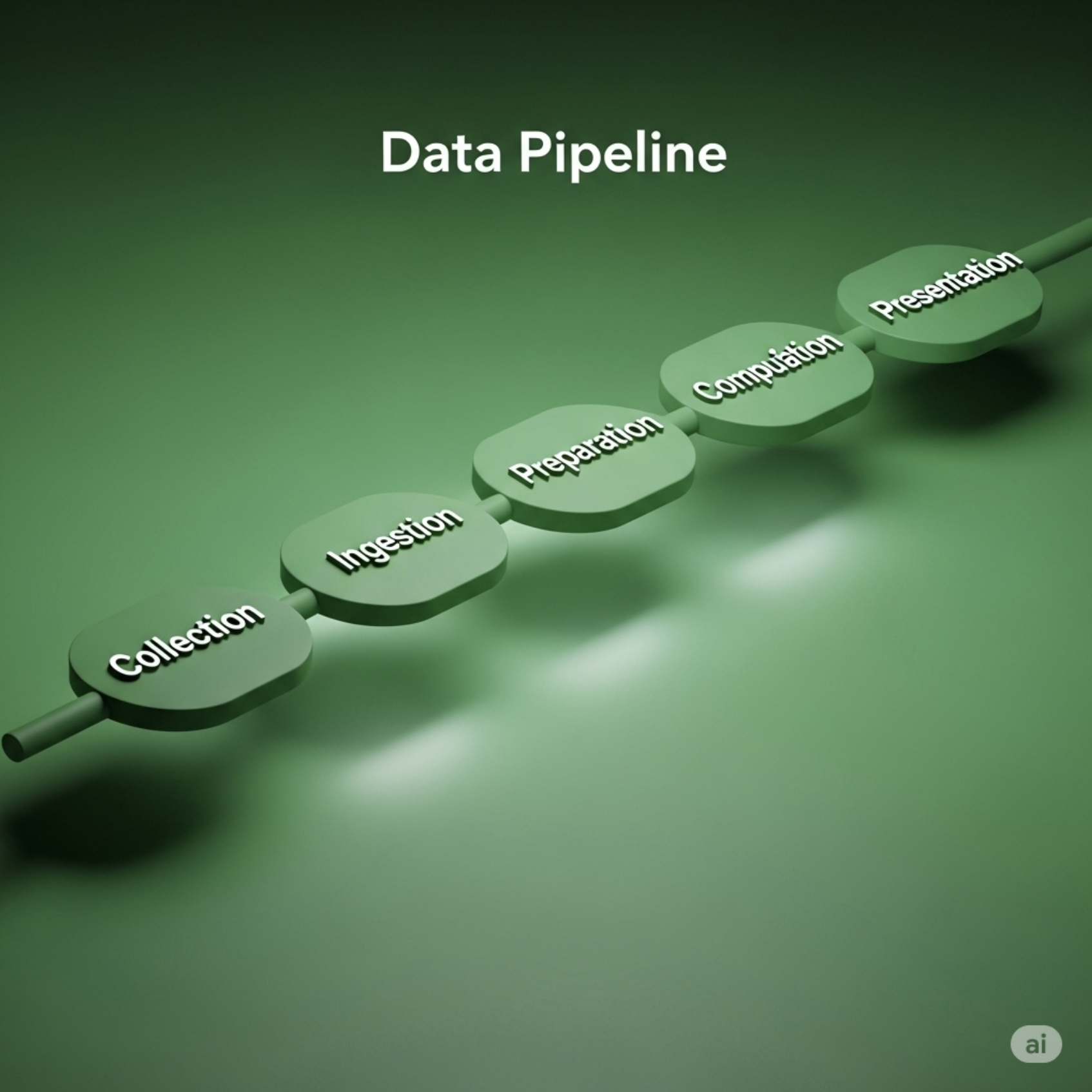
Data pipelines fail through abnormal ingestion volumes, unexpected schema shifts, and silent value drift. Managing pipeline risk requires structured taxonomy and proactive observability:
Known Unknowns
Identified failure points where teams know volatility exists but lack automated monitoring or resource depth to manage them continuously.
Unknown Knowns
Silent data discrepancies lurking in source systems that could easily be resolved if systematic observability brought them to light.
Unknown Unknowns
Unforeseen upstream changes and systemic anomalies that break downstream decision-making without triggering standard metadata alerts.
Execution Roadmap
Four Levers to Accelerate Data Transformation
High maturity requires combining architectural modernization with cultural accountability across four core strategic initiatives:
Measurable Financial & Operational Impact
Quantified returns documented in enterprise and banking sector transformations:
References & Sources

The Advice AI: My AI Study Buddy: How Google LM Transforms My Learning
As someone who enjoys networking and building platforms, I've always been keen on leveraging technology to make work more efficient. Lately, I've been diving deeper into how tools like Google's Language Model (Google LM) are transforming the way I approach education and information management, particularly with my "Data Strategy for leaders" course (Imperial College London).
It's truly exciting because it goes beyond just searching for files. What I've found incredibly useful is the ability to upload my own course materials – think lecture notes, readings, and my own thoughts from the "Data Strategy" class. This means I'm not just relying on general web searches; I'm feeding the system my specific learning content.
Once those sources are uploaded, the real magic happens. I can ask specific questions directly related to the material. No more digging through hundreds of pages to find that one answer! If I'm trying to differentiate between data governance and data management, I can just ask, and it provides an answer based on my uploaded course content.
Beyond just answering questions, I'm finding it invaluable for creating study aids. I can get summaries of entire modules, which is perfect for quick review. And what's even cooler is the potential to generate mind maps or even initial slidedecks directly from the information I've fed it. For someone who enjoys creating and organizing, this is a game-changer. It's like having a dedicated assistant for my learning journey, helping me structure my thoughts and prepare for presentations, all while staying focused on the specific topic at hand.
This really elevates the learning experience, turning passive consumption of information into an active, interactive process. It's clear that these AI-powered tools are not just for collecting files; they're becoming essential for deep learning and content creation in a personalized way.
https://notebooklm.google/


Scaling Enterprise Platforms Strategic insights on core platform delivery, digital governance, and executing large-scale enterprise architectures (in by Kevin Lancashire, Switzerland)
Subscribe on LinkedInDigital Executive Track Record
Einblick in realisierte Plattform-Architekturen, Enterprise-Governance und skalierbare digitale Initiativen.