The Advice - win with AI: How AI and Blockchain are Changing the Game for Creators by Kevin Lancashire

Here's a rewritten version of the blog post:

Revolutionizing Intellectual Property: Blockchain and AI

The convergence of blockchain and artificial intelligence (AI) is reshaping the landscape of intellectual property (IP) management. These cutting-edge technologies offer innovative solutions to enhance the security, transparency, and efficiency of IP processes across various industries.

Streamlining IP Lifecycle Management

* Automated IP Notarization & Infringement Detection: By leveraging blockchain to notarize IP assets and employing AI algorithms to compare them with competitor assets, businesses can proactively detect potential infringements. This approach is particularly valuable in industries like 3D printing, where complex data files may be subject to multiple IP rights.

* AI-Powered IP Analysis & Classification: AI techniques, such as machine learning, streamline critical IP processes like patent analysis and classification. This automation enables businesses to more efficiently locate relevant patents and safeguard their intellectual assets.

Enhancing IP Protection & Royalty Distribution

* Secure Copyright Management & Automated Content Monitoring: In the music industry, blockchain provides a secure and transparent platform for copyright management, while AI facilitates automated content monitoring. This combination empowers artists and rights holders to effectively combat piracy and ensure fair compensation.

* Streamlined Royalty Distribution: Smart contracts, powered by blockchain, can automate royalty distribution, ensuring transparent and efficient payments to all stakeholders.

Combating Copyright Infringement

* AI-Powered Copyright Infringement Detection: AI, particularly neural networks, excels at detecting copyright infringement across various media, including literary works and audiovisual content.

* Blockchain-Enhanced Traceability & Security: Blockchain technology complements AI by providing a secure and transparent platform to prevent the unauthorized dissemination of copyrighted materials. Blockchain-based systems enhance traceability and security, allowing for efficient retrieval of copyright information and robust resistance to attacks.

Navigating the Challenges

The integration of blockchain and AI into IP management presents challenges:

* Data Privacy Concerns: Ensuring responsible data handling and mitigating potential biases in AI algorithms are crucial.

* Ethical Considerations: Addressing ethical concerns related to AI-powered decision-making and the potential impact on creators is paramount.

* Legal Uncertainties: The legal implications of using blockchain for IP rights management require further clarification and acceptance by governmental authorities.

The Future of IP Management

Despite these challenges, the integration of blockchain and AI holds immense potential to revolutionize IP management. By embracing these technologies, businesses can enhance IP protection, streamline processes, and unlock new opportunities in the digital age.

Disclaimer: This information is for general knowledge and discussion purposes only and does not constitute legal or financial advice.

Source:

Ragot, S., Rey, A., & Shafai, R. (2020). IP lifecycle management using blockchain and machine learning: Application to 3D printing datafiles. World Patent Information, 62, 101966. https://doi.org/10.1016/j.wpi.2020.101966.

Sahoo, B., Sakalkar, P., Scholar, R., & Supervisor, R. (2024). Smart Contracts, Smarter Royalties: Tech for India's Music Industry. International Journal for Multidimensional Research Perspectives. https://doi.org/10.61877/ijmrp.v2i10.205.

K., L., D, S., Rai, S., Patgar, S., & Poojary, S. (2024). A Review on A Study of Impact of Technological Advancement of Intellectual Property and Research Methodologies. International Journal of Advanced Research in Science, Communication and Technology. https://doi.org/10.48175/ijarsct-19259.

Developing IP Strategies: Day One (day1tech.com) can help creators and businesses develop IP strategies that leverage AI and blockchain, such as:

- Minting NFTs of digital artworks and collectibles.

- Creating blockchain-based marketplaces for AI-generated content.

- Developing AI-powered tools for IP management and enforcement.

Contact Kim Vemula (kim@day1tech.com) if you have a need.

Information about our computer vision as a service product.

www.theadvice.ch

The Advice - win with AI: Gemini LLM vs. Google Search: Why We Need Both by Kevin Lancashire

We all rely on Google Search to navigate the vast landscape of the web, finding information with keywords.1 But what if your information needs are more nuanced, demanding deeper understanding and analysis? This is where Large Language Models (LLMs) like Google's Gemini come into play. While Google Search excels at information retrieval, Gemini offers a different kind of power: language understanding and generation. So, why do we need both?

Google Search: The Master of Retrieval

Google Search is a powerhouse for finding information quickly. It indexes billions of web pages, allowing you to search for keywords and instantly access relevant results. Its strength lies in:

  • Speed and Scale: Google Search can sift through massive amounts of data in milliseconds, providing access to a vast repository of information.

  • Breadth of Coverage: It covers a wide range of topics and sources, making it ideal for general information gathering.

  • Keyword-Based Searching: It excels at finding documents containing specific keywords, making it perfect for factual queries.

Gemini LLM: The Expert in Understanding

Gemini, on the other hand, is an LLM designed to understand and generate human-like text.7 Its strengths lie in:

  • Nuance and Context: Gemini can grasp the subtle complexities of language, understanding context and intent beyond simple keywords.

  • Analysis and Synthesis: It can analyze information, summarize complex topics, and even generate creative content.

  • Domain Expertise: Specialized LLMs within the Gemini ecosystem can be trained on specific datasets, becoming experts in fields like law, medicine, or coding.

Why Not Just One?

Think of it this way: Google Search is like a vast library, while Gemini is like a knowledgeable librarian. Search can quickly find the books you need, but Gemini can help you understand them, summarize their key points, and even answer complex questions based on the information within them.

Here's a simple analogy:

  • You need to know the population of Tokyo: Google Search is your best bet. It will quickly provide you with the answer from a reliable source.

  • You need to understand the legal implications of a specific clause in a contract: Gemini, especially a legal-focused specialized LLM, would be more helpful. It can analyze the clause within the broader context of the contract and provide insights that a simple keyword search wouldn't reveal.

The Future: A Powerful Partnership

The future likely involves a seamless integration of search and LLMs. Imagine using Google Search to find relevant documents and then using Gemini to summarize them, answer your specific questions, or even generate new content based on the information found. This powerful partnership will combine the strengths of both technologies, offering users a more comprehensive and intelligent way to access and understand information. We need both because they serve different but complementary purposes: Search for finding information, and LLMs like Gemini for understanding and utilizing that information in more sophisticated ways.

Image generated by imagen3: getting the typo right seems to remain a challenge - not image.3 specific issue in early 2025.

The Advice - win with AI: Why Embracing Risk Fuels Economic Growth by Kevin Lancashire

Risk-taking is a significant driver of economic growth, as it often leads to innovation, investment, and increased productivity. Here's how risk-taking influences economic growth:

Mechanisms of Risk-Taking in Economic Growth

Investment in Risky Capital: Risk-taking encourages investment in high-yield, risky capital, which can lead to substantial welfare gains and increased consumption growth. This shift from safe to risky capital is crucial for economic growth as it supports the development of specialized, innovative production inputs .

Enterprise Risk-Taking: Enterprises that engage in risk-taking by investing in high-risk, high-return projects contribute to capital accumulation and technological progress. This behavior is often influenced by local government economic growth targets, which can increase enterprise risk-taking levels .

Innovation and Financial Systems: Financial systems play a critical role by evaluating entrepreneurs, mobilizing savings, and diversifying risks associated with innovative activities. Effective financial systems enhance the probability of successful innovation, thereby accelerating economic growth .

Human Capital Investment: Reducing uninsurable labor income risk can lead to increased investment in human capital, which boosts growth and welfare. This highlights the importance of balancing risk and investment in both physical and human capital for sustained economic growth .

Effects of Risk-Taking on Economic Growth

Corporate Growth and Earnings: Risk-taking is positively related to corporate growth and earnings, especially during economic downturns, as it allows firms to capitalize on high-risk opportunities that can lead to significant returns .

Innovation and Development: Risk acts as an incentive for innovation, driving the economic development of industrial enterprises by enhancing their innovation and investment potential .

Conclusion

Risk-taking is integral to economic growth as it fosters innovation, investment, and productivity. By encouraging investment in risky, high-yield capital and supporting enterprise risk-taking, economies can achieve higher growth rates. Financial systems and government policies that facilitate risk-taking can further enhance these growth prospects. However, managing the balance between risk and stability is crucial to ensure sustainable economic development.

Economic policy uncertainty and corporate risk-taking: International evidence

Published 1 Dec 2019 · Quoc Trung Tran

Journal of Multinational Financial Management

Economic policy uncertainty negatively impacts corporate risk-taking across 18 countries, with uncertainty avoidance culture and individualistic culture enhancing or weakening this negative effect.

The Advice - win with AI: Global risks report by Kevin Lancashire

The most striking risks detailed in the report are:

  • The risk of further destabilizing consequences following Russia’s invasion of Ukraine, as well as in the Middle East and in Sudan.

  • The danger of a decline in global trade following a spiral of tariffs and other trade-restricting measures.

  • The risk of a loss of support for and faith in the role of international organizations in conflict prevention and resolution.

  • The risk of technology accelerating the spread of false or misleading information.

  • The risk of a lack of sustained focus on humanitarian crises by major powers.

  • The risk of increasingly divided times since the Cold War, with a bleak outlook across current, short-term, and long-term outlooks.

  • The risk of a decline in the Western-led global order over the next decade.

  • The risk of a lack of concrete action to address polluting activities.

  • The risk of low-probability, high-impact risks over a 10-year time horizon, including intrastate violence from biological terrorism and adverse outcomes of frontier technologies involving accidental or malicious misuse of gene editing technologies, or even of brain-computer interfaces.

  • The risk of a lack of reliable data on health risks, including reproductive and developmental toxicity and longer-term effects of low-level exposures.

Source: Risksreport, WEF2025

The Advice - win with AI: Why nexus matters for europe by Kevin Lancashire

Nexus: A Blueprint for Navigating Interconnected Challenges

The central thesis of *Nexus*—whether referring to network theory, systems thinking, or global interdependencies—is that **modern challenges cannot be solved in isolation**. The book argues that climate change, economic instability, technological disruption, and geopolitical tensions are deeply interconnected, requiring holistic strategies to address them. For Europe, a continent built on collaboration and facing unprecedented cross-border crises, this message isn’t just theoretical—it’s existential.

Why Does This Matter to Europe?

1. Survival in a Polycrisis World

Europe is uniquely vulnerable to cascading risks due to its reliance on global supply chains, shared energy grids, and open borders. The 2022 energy crisis—sparked by Russia’s invasion of Ukraine—exposed how a geopolitical shock could ripple through heating costs, industrial output, and social stability. Nexus underscores that Europe’s resilience hinges on anticipating linkages, like diversifying energy sources while accelerating green transitions.

2. The EU’s Institutional Experiment

The European Union is the world’s most ambitious attempt to govern through interconnectedness. From the Eurozone’s financial ties to the Schengen Area’s border-free travel, the EU thrives (or stumbles) based on how well it balances national sovereignty with collective action. *Nexus* warns that siloed policymaking—such as treating climate goals separately from economic inequality—risks fracturing this delicate equilibrium.

3. *mClimate Leadership and the Green Deal

Europe’s Green Deal exemplifies a *nexus approach*: it ties carbon neutrality to job creation, energy security, and technological innovation. However, as heatwaves strain Mediterranean agriculture and floods disrupt German industries, the book urges Europe to go further. Solutions must bridge sectors—for example, linking renewable energy investments to water conservation in drought-prone regions.

4. Digital Sovereignty and Ethical Tech

Europe’s push for GDPR and the AI Act reflects its desire to govern the digital realm without relying on U.S. or Chinese tech giants. *Nexus* argues that true digital sovereignty requires **interoperable systems**, like pan-European cloud infrastructure or AI ethics frameworks that align with global human rights standards.

---

A Call to Action

Nexus isn’t just a diagnosis—it’s a toolkit. For Europe, this means:

- Prioritizing systemic resilience: Stress-test policies for unintended consequences (e.g., how farm subsidies impact migration patterns).

- Investing in cross-border innovation: Scale projects like hydrogen corridors or AI ethics councils that span multiple nations.

- Empowering citizens: Use participatory democracy tools to engage the public in complex trade-offs (e.g., green transitions vs. short-term costs).

The Stakes for Europe

If Europe fails to adopt a *nexus mindset*, it risks:

- Fragmentation: Crises like migration or inflation could deepen divides between member states.

- Global Irrelevance: Competing powers like the U.S. and China will dominate rule-setting for tech, trade, and climate.

- Missed Opportunities: The green and digital transitions could stall without integrated strategies.

But if Europe leans into its strengths—multilateralism, innovation, and social cohesion—it can pioneer a model for managing complexity in the 21st century.

In short: Nexus is a wake-up call. For Europe, the choice is clear—think interconnected, or unravel.

#EU #Sustainability #Leadership #ClimateAction #DigitalTransformation**

The Advice - win with AI: The Pros and Cons of DeepSeek: A General-Purpose Framework for Modern AI by Kevin Lancashire

What is DeepSeek?

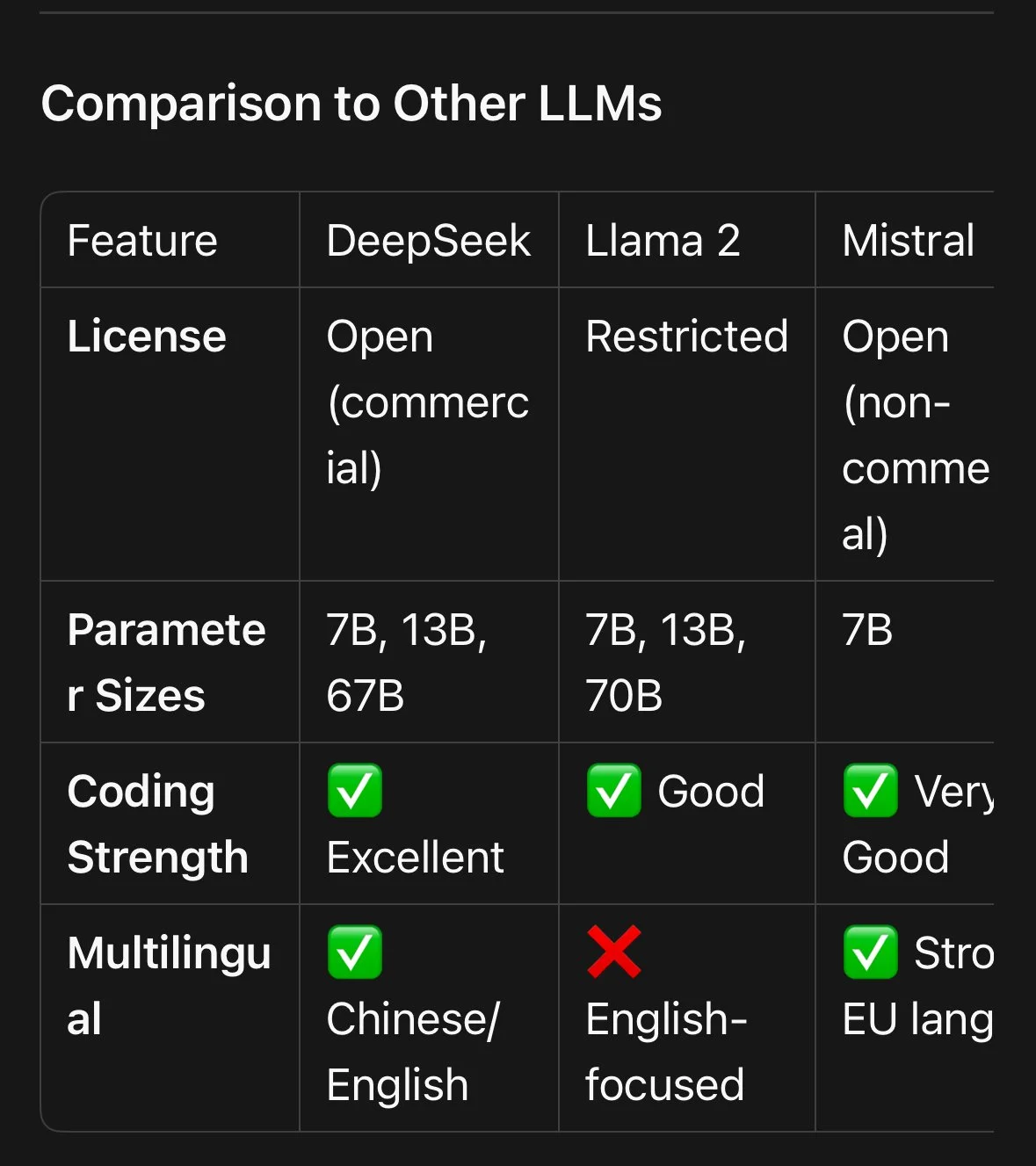
DeepSeek is a family of open-source LLMs developed by the Chinese company DeepSeek Inc. These models are designed to compete with other open-source LLMs like Llama 2, Mistral, or Falcon. Key features include:

  • Scalability: Models range from 7B to 67B parameters.

  • Open weights**: Free for research and commercial use (with some restrictions).

  • Strong performance**: Competes with GPT-3.5-tier models in reasoning, coding, and multilingual tasks.

---

Pros of DeepSeek (as an LLM)

1. Cost-Effective

- Free for commercial use (under Apache 2.0-like licenses), unlike proprietary models like GPT-4.

2. High Performance

- Benchmarks show it outperforms Llama 2 in coding (HumanEval) and math (GSM8K).

3. Multilingual Support

- Trained on diverse datasets, including Chinese and English, making it useful for cross-lingual applications.

4. Fine-Tuning Flexibility

- Easy to adapt for domain-specific tasks (e.g., healthcare, finance) using tools like Hugging Face or LoRA.

5. Transparency

- Open weights allow developers to inspect and modify the model, avoiding “black box” concerns.

Cons of DeepSeek

1. Resource-Intensive

  • Larger models (e.g., 67B) require significant GPU memory, limiting accessibility for small teams.

2. Limited Ecosystem

  • Fewer pre-trained variants (e.g., chat, instruction-tuned) compared to Llama 2 or Mistral.

3. Language Bias

  • Despite multilingual support, performance in non-Chinese/English languages lags behind models like BLOOM.

4. Community Size

  • Smaller developer community than Llama 2, resulting in fewer third-party tools and tutorials.

5. Regulatory Uncertainty

  • Licensing terms may restrict use in certain industries (e.g., military, surveillance).

Comparison to Other LLMs

see image

Who Should Use DeepSeek?

  1. Developers: For building custom chatbots, coding assistants, or multilingual apps.

  2. Researchers**: Exploring LLM capabilities without licensing hurdles.

  3. Businesses: Cost-sensitive enterprises needing scalable AI without API fees.

Final Thoughts

DeepSeek is a compelling open-source LLM, especially for Chinese-English applications and coding tasks. While it lacks the ecosystem maturity of Llama 2 or GPT, its performance and licensing make it a strong contender.

Recommendation: Use DeepSeek if you prioritize cost control, transparency, and multilingual support. Pair it with tools like LangChain or Hugging Face to maximize its potential.

**Understanding the importance of comparing DeepSeek and ChatGPT boils down to one critical question:**

*How do their differences impact your goals, resources, and ethics?*

Here’s why this matters:

---

### **1. Control vs. Convenience**

- **DeepSeek**:

- **Why it matters**: Full access to the model’s code and weights lets you *control behavior* (e.g., removing biases, adding safety filters).

- **Impact**: Critical for industries like healthcare or law, where **accuracy** and **compliance** are non-negotiable.

- **ChatGPT**:

- **Why it matters**: Plug-and-play simplicity saves time but locks you into OpenAI’s rules.

- **Impact**: Ideal for rapid prototyping but risky for sensitive data (e.g., proprietary code or patient records).

---

### **2. Cost and Scalability**

- **DeepSeek**:

- **Why it matters**: *No API fees* mean long-term savings for startups or small businesses.

- **Impact**: You pay upfront with technical effort (hosting, fine-tuning) instead of recurring costs.

- **ChatGPT**:

- **Why it matters**: Pay-as-you-go pricing scales easily but becomes expensive for high-volume usage (e.g., customer support bots).

- **Impact**: Predictable for enterprises but prohibitive for budget-conscious teams.

---

### **3. Ethical and Legal Responsibility**

- **DeepSeek**:

- **Why it matters**: Open-source models let you audit *how decisions are made*, avoiding “black box” risks.

- **Impact**: Avoid PR disasters (e.g., biased hiring tools) or GDPR violations.

- **ChatGPT**:

- **Why it matters**: You rely on OpenAI’s opaque safeguards, which may not align with your ethics.

- **Impact**: Legal liability if the model generates harmful content (e.g., misinformation).

---

### **4. Language and Cultural Fit**

- **DeepSeek**:

- **Why it matters**: Strong Chinese-English support is a *game-changer* for global teams or Asian markets.

- **Impact**: Build apps for bilingual users without losing nuance.

- **ChatGPT**:

- **Why it matters**: English dominance limits reach in non-Western markets.

- **Impact**: Missed opportunities in regions like China, where language models are highly regulated.

---

5. Future-Proofing

- DeepSeek:

- Why it matters: Owning your AI stack avoids vendor lock-in.

- Impact: Adapt to regulatory changes (e.g., EU AI Act) without waiting for OpenAI updates.

- ChatGPT:

- Why it matters**: Dependency on OpenAI’s roadmap can disrupt long-term plans.

- Impact: Sudden API changes or price hikes could derail your product.

The Bottom Line

This comparison isn’t just about *features*—it’s about aligning technology with your values, budget, and audience. Choosing the right tool could mean:

- Saving thousands in costs 💸

- Avoiding legal headaches ⚖️

- Capturing untapped markets 🌏

- Building trust with users 🤝

Ask yourself: Do I prioritize speed and ease (ChatGPT) or ownership and flexibility (DeepSeek)? The answer shapes your AI strategy’s success.

---

Risk Mitigation Strategies

1. Self-Hosting

- Host DeepSeek on EU-based servers to avoid data transfers to China.

- Ensure all training/fine-tuning data complies with GDPR (e.g., anonymized, lawfully collected).

2. Legal Safeguards

- Use GDPR-compliant data processing agreements (DPAs) if interacting with DeepSeek’s developers.

- For cloud-based solutions, verify that data stays in the EU or is covered by SCCs.

3. Audit the Model

- Inspect DeepSeek’s code, training data sources, and outputs for biases, security flaws, or unethical behavior.

- Document compliance efforts to satisfy AI Act transparency requirements.

4. Limit Use Cases

- Avoid deploying DeepSeek for *high-risk* AI applications (e.g., medical diagnosis, policing) unless rigorously validated.

5. Consult Experts

- Work with legal advisors to navigate GDPR, AI Act, and export control regulations.

- Conduct a *Data Protection Impact Assessment (DPIA)* if processing sensitive data.

Final Verdict

Yes, there are risks: but they are manageable for non-sensitive use cases (e.g., internal chatbots, non-personal data analysis). For high-stakes applications (e.g., healthcare, finance), prioritize EU or U.S. tools with clearer compliance frameworks.

If using DeepSeek:

- Self-host in the EU.

- Avoid processing personal/sensitive data.

- Stay updated on evolving EU-China data regulations.

The Advice - win with AI: India and Switzerland: A Powerful Partnership in AI Innovation by Kevin Lancashire

Harnessing the Power of AI Together

Artificial Intelligence (AI) is rapidly transforming the global landscape, and nations worldwide are vying to establish themselves as leaders in this burgeoning field. India and Switzerland, with their unique strengths and complementary capabilities, have a significant opportunity to forge a powerful partnership in AI innovation.

Why India and Switzerland?

India's Strengths:

  • Massive Data Pool: India's vast and diverse population generates a wealth of data, a crucial resource for training robust AI models.

  • Strong IT Talent Pool: India boasts a large and skilled pool of IT professionals, including data scientists and AI engineers.

  • Growing AI Ecosystem: India's AI ecosystem is rapidly expanding, with numerous startups, research institutions, and government initiatives focused on AI development and adoption.

  • Government Support: The Indian government is actively promoting AI innovation through various initiatives.

Switzerland's Strengths:

  • Innovation Hub: Switzerland is a global leader in innovation and research, particularly in areas like robotics, healthcare, and finance.

  • Strong Regulatory Framework: Switzerland has a robust legal and ethical framework for data protection and AI development.

  • High-Quality Education: Switzerland has a world-class education system that produces highly skilled professionals in AI and related fields.

Areas of Collaboration

  1. Joint Research and Development:

    • Setting up joint research centers

    • Exchange programs for researchers

    • Co-funding of research projects

  2. Talent Exchange:

    • Internships

    • Training programs

    • Knowledge sharing initiatives

  3. Data Sharing and Collaboration:

    • Developing frameworks for data anonymization and aggregation

    • Establishing data trusts

  4. Investment and Funding:

    • Setting up joint venture funds

    • Incubators and accelerators

Ethical Considerations

Collaboration on developing ethical guidelines and standards for AI development and deployment is crucial. This could involve:

  • Jointly developing ethical frameworks

  • Sharing best practices

The Road Ahead

By leveraging their respective strengths and addressing ethical considerations, India and Switzerland can create a powerful partnership that drives innovation, economic growth, and societal impact.

Are you interested in exploring AI collaborations between India and Switzerland? Let's connect and discuss how we can harness the power of AI together.

Kevin Lancashire, CDO, Switzerland

The Advice - win with AI: Potential Benefits and Risks of a Virtual Neocortex by Kevin Lancashire

Exploring the Potential of Non-invasive Nanobots for Brain Enhancement: Virtual Neocortex and the Future of Humanity

The human brain, with its intricate network of neurons and synapses, has always been a source of fascination and wonder. As our understanding of the brain grows, so too does our desire to unlock its full potential. In recent years, the concept of brain-computer interfaces (BCIs) has gained significant traction, offering the tantalizing possibility of enhancing cognitive function, treating neurological disorders, and even merging human consciousness with artificial intelligence. One particularly intriguing avenue of BCI research involves the use of nanobots – microscopic robots that can interact with the brain at a cellular level. This article delves into the concept of non-invasive nanobot delivery to the brain, explores the potential of a virtual neocortex, and discusses the potential benefits, risks, and ethical implications of this groundbreaking technology.

Non-invasive Nanobot Delivery to the Brain

Delivering therapeutic agents to the brain presents a significant challenge due to the blood-brain barrier (BBB). The BBB is a tightly packed layer of endothelial cells that shields the brain from harmful substances in the blood while allowing necessary nutrients to pass through . This highly selective barrier poses a challenge to delivering therapeutic agents into the brain . However, recent advancements in nanotechnology have opened up new possibilities for non-invasive brain drug delivery.  

One promising approach involves intranasal administration, a non-invasive method that bypasses the BBB to allow direct access of drugs to the central nervous system (CNS) . Nanotechnology-based drug delivery systems have shown remarkable capacities in overcoming the challenges posed by nose-to-brain drug delivery and facilitating targeted drug accumulation within the brain while minimizing side effects of systemic distribution .  

Nanocarriers (NCs) are promising tools to improve drug delivery across the BBB for more effective treatment of brain disorders . Currently, the most clinically useful NCs for brain drug delivery include liposomes, albumin nanoparticles (NPs), and polymeric NPs . Liposomes have been widely used in clinical practice, mainly for non-CNS indications, since the first liposomal formulation was approved in 1995 . Liposomes feature excellent safety profiles and the ability to encapsulate both hydrophilic and lipophilic therapeutic agents, including both small molecules and large biologics, without the need to modify the compounds .  

Another strategy involves engineering magnetic nanorobots that can be remotely controlled to carry out complex tasks inside the human body, such as targeted drug delivery and organ repair . Researchers have successfully tested these devices in model aneurysms in the lab and in a small number of rabbits . These nanorobots show potential for transporting and releasing drug molecules to precise locations in the body without risk of leaking into the bloodstream . This method also avoids the need for doctors to manually shape a microcatheter to navigate a complex network of small blood vessels in the brain to reach the aneurysm – a painstaking task which may take hours during surgery

The development of a virtual neocortex and non-invasive nanobot delivery to the brain holds immense potential for both individuals and society. Some of the potential benefits include:

Cognitive Enhancement

A virtual neocortex could potentially enhance memory, learning, and problem-solving abilities, leading to improved productivity and creativity. This could have profound implications for education, learning, and personal development, potentially leading to personalized learning experiences and accelerated cognitive development . Virtual reality has also shown promise in promoting exercise and active physical behavior, further enhancing human capabilities .  

Treatment of Neurological and Psychiatric Disorders

Nanobots could be used to deliver targeted therapies to specific brain regions, offering new treatments for conditions such as Alzheimer's disease, Parkinson's disease, and epilepsy. Nanobots could overcome the limitations of traditional drug delivery methods and provide more targeted and effective treatments . A virtual neocortex could also be used for understanding and treating psychiatric disorders, such as obsessive-compulsive disorder (OCD), anxiety, and depression, which are associated with dysfunction in certain areas of the neocortex, including the anterior cingulate cortex (ACC) .  

Brain-Computer Interfaces

A virtual neocortex could serve as a bridge between the brain and external devices, allowing individuals to control computers, prosthetics, and other technologies with their thoughts. This could revolutionize the way we interact with technology and the world around us. Virtual agents could also enhance social-cognitive skills, providing new opportunities for social interaction and learning .  

Understanding the Brain

A virtual neocortex could provide a powerful tool for studying the brain and unlocking the mysteries of consciousness. By simulating brain activity, researchers can gain a deeper understanding of how the brain works and develop new treatments for brain disorders. The evolution of the cerebral cortex has played a crucial role in the development of human cognition, and a virtual neocortex could provide further insights into this process .  

However, alongside these potential benefits, there are also significant risks and challenges associated with this technology:

Safety Concerns

Introducing nanobots into the brain could have unforeseen consequences, potentially leading to inflammation, tissue damage, or other adverse effects. More research is needed to ensure the safety and biocompatibility of nanobots in the brain.

Ethical Implications

The ability to enhance cognitive function raises ethical questions about fairness, equality, and the potential for misuse. There is a risk that brain-computer interfaces could exacerbate existing social inequalities or create new forms of discrimination .  

Social Impact

The widespread adoption of brain-computer interfaces could have profound social implications, potentially altering the way we interact with each other and the world around us. There is a concern that disengaging from the real world in favor of virtual settings may induce adverse neurocognitive changes .  

Ethical Implications of Nanobot Brain Augmentation

The ethical implications of using nanobots to augment human brain function are significant and require careful consideration. Some of the key ethical concerns include:

  • Safety and Risk Considerations: Brain surgery carries inherent risks, and the long-term effects of nanobots in the brain are unknown .  

  • Enhancement as Unnecessary, Unnatural, or Aberrant: Some argue that using such a powerful technology for non-essential aims is ethically questionable .  

  • Fairness, Equality, and Distributive Justice: Concerns exist about the potential for brain augmentation to create or worsen social inequalities .  

  • Privacy and Autonomy: Implanting nanobots in the brain raises concerns about mental privacy and the potential for unauthorized access to neural data .  

  • Informed Consent: Individuals must be fully informed of the risks and benefits of brain augmentation before consenting to the procedure .  

Impact on Society and the Future of Humanity

The development of a virtual neocortex and non-invasive nanobot delivery to the brain has the potential to reshape society and the future of humanity in profound ways. Some of the potential impacts include:

Increased Human Potential

Brain-computer interfaces could unlock new levels of human potential, leading to advancements in science, technology, and the arts. The neocortex plays a crucial role in abstract thinking, art, and language, and a virtual neocortex could further enhance these capabilities .  

New Forms of Communication and Understanding

Brain-computer interfaces could enable new forms of communication, potentially allowing individuals to share thoughts and emotions directly with each other. This could lead to greater empathy and understanding between people, similar to the effects of psychedelics, which have emerged as potential therapeutic agents due to their ability to increase emotional processing, introspection, and a sense of interconnectedness .  

Changes in the Workforce

Brain-computer interfaces could automate many tasks currently performed by humans, leading to changes in the workforce and the economy. This could have both positive and negative consequences, potentially creating new job opportunities while also displacing workers in certain sectors.

Transhumanism

Brain-computer interfaces could pave the way for transhumanism, a movement that seeks to use technology to enhance human capabilities and overcome limitations. This raises fundamental questions about what it means to be human and the future of our species.

Conclusion

The prospect of non-invasive nanobots delivering a virtual neocortex to the brain is a fascinating and potentially transformative development in the field of brain-computer interfaces. While the technology is still in its early stages, it holds immense promise for enhancing cognitive function, treating neurological disorders, and expanding the boundaries of human potential. However, it is crucial to proceed with caution, carefully considering the potential risks, ethical implications, and social impact of this groundbreaking technology. As we continue to explore the mysteries of the brain, we must ensure that we use this knowledge responsibly and ethically, striving to create a future where technology serves to enhance human flourishing and promote a more just and equitable society.

The long-term implications of nanobots, virtual neocortex technology, and brain-computer interfaces are vast and uncertain. These technologies could revolutionize healthcare, education, and communication, but they also raise ethical challenges that need to be addressed. Responsible innovation in this field is crucial to ensure that these technologies are used for the benefit of humanity and do not exacerbate existing social inequalities or create new forms of discrimination. As we move forward, it is essential to engage in open and informed public discourse about the potential benefits and risks of these technologies, and to develop ethical guidelines and regulations that promote their safe and equitable use.